<?xml version="1.0" encoding="UTF-8"?>
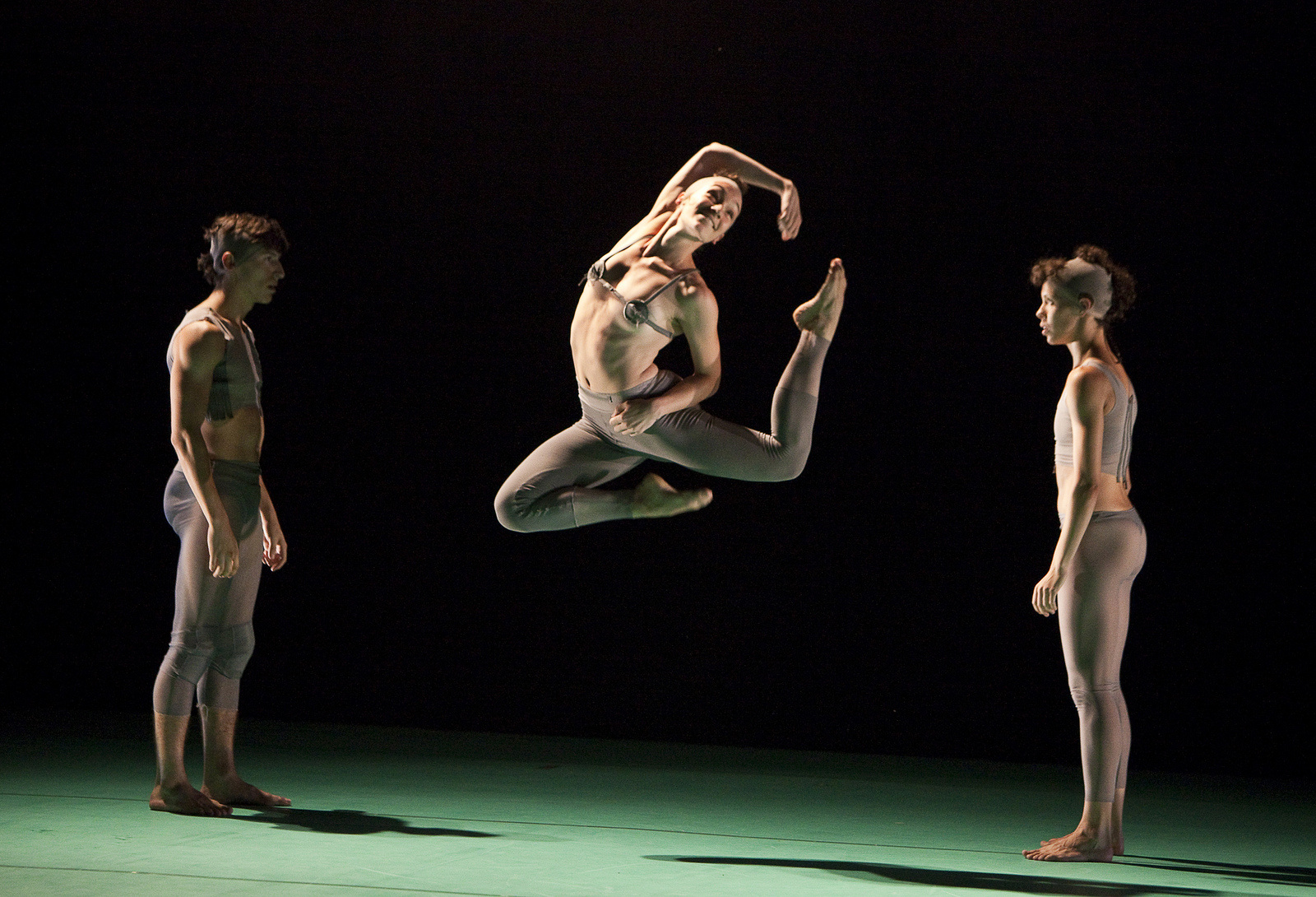
<!--Generated by Squarespace V5 Site Server v5.13.159 (http://www.squarespace.com) on Fri, 24 May 2013 20:20:23 GMT--><feed xmlns="http://www.w3.org/2005/Atom" xmlns:dc="http://purl.org/dc/elements/1.1/"><title>onECM Blog</title><subtitle>onECM Blog</subtitle><id>http://www.jponecm.com/the-blog/</id><link rel="alternate" type="application/xhtml+xml" href="http://www.jponecm.com/the-blog/"/><link rel="self" type="application/atom+xml" href="http://www.jponecm.com/the-blog/atom.xml"/><updated>2012-10-11T17:43:17Z</updated><generator uri="http://five.squarespace.com/" version="Squarespace V5 Site Server v5.13.159 (http://www.squarespace.com)">Squarespace</generator><entry><title>Agile for BPM</title><id>http://www.jponecm.com/the-blog/agile-for-bpm.html</id><link rel="alternate" type="text/html" href="http://www.jponecm.com/the-blog/agile-for-bpm.html"/><author><name>JP Harris</name></author><published>2012-10-11T17:42:45Z</published><updated>2012-10-11T17:42:45Z</updated><summary type="html" xml:lang="en-US"><![CDATA[When the focus of a Business Process Management (BPM) initiative is to use technology to make process improvements in value chain activities (revenue generating) or management/administrative processes (cost reducing), there are a set of core practices that will help to ensure that expected results are realized.]]></summary></entry><entry><title>The Orpheus Model: Collaboration Builds Leaders</title><id>http://www.jponecm.com/the-blog/the-orpheus-model-collaboration-builds-leaders.html</id><link rel="alternate" type="text/html" href="http://www.jponecm.com/the-blog/the-orpheus-model-collaboration-builds-leaders.html"/><author><name>JP Harris</name></author><published>2012-07-06T21:53:30Z</published><updated>2012-07-06T21:53:30Z</updated><summary type="html" xml:lang="en-US"><![CDATA[Leadership is learned through the experience of leading.&nbsp; As illustrated by the Orpheus Chamber Orchestra (see video) building a leadership group where each has a sense of shared responsibility requires a collaborative environment where each is listened to and where the focus is on working together to solve problems and finding the best way to work together. &nbsp;&nbsp;Creating such a group of leaders requires that one model the desired behavior, coach others to take chances, and encourage critical discussions that are focused on finding the best idea rather than lobbying for ideas. <iframe width="560" height="315" src="http://www.youtube.com/embed/dBOk1yxtGxE?rel=0" frameborder="0" allowfullscreen></iframe>]]></summary></entry><entry><title>Choreographing Consulting</title><category term="Consulting"/><category term="choreography"/><category term="dance"/><category term="implementation method"/><category term="methodology"/><id>http://www.jponecm.com/the-blog/choreographing-consulting.html</id><link rel="alternate" type="text/html" href="http://www.jponecm.com/the-blog/choreographing-consulting.html"/><author><name>JP Harris</name></author><published>2012-02-17T15:30:52Z</published><updated>2012-02-17T15:30:52Z</updated><summary type="html" xml:lang="en-US"><![CDATA[<p><span class="full-image-float-left ssNonEditable"><span><img style="width: 175px;" src="http://www.jponecm.com/storage/dance-041509-2.jpg?__SQUARESPACE_CACHEVERSION=1329492723965" alt="" /></span></span>Early in my consulting career, I found myself crafting new methods and building methodologies.&nbsp; This has continued over the years as I&rsquo;ve moved from one consultancy to another, between technologies and various types of projects.&nbsp; Throughout, I&rsquo;ve found myself diving deep into method; never being satisfied with what was there, always looking for a better way to describe the tasks, milestones, and deliverables that made up my approach to a project or a type of work.</p>
<p>With practice my ability to craft methodology has gotten better.&nbsp; Describing a method has become a familiar process.&nbsp; I&rsquo;ve built a library of past work which I&rsquo;ll</p>]]></summary></entry><entry><title>The Implications of Dance Playshop</title><id>http://www.jponecm.com/the-blog/the-implications-of-dance-playshop.html</id><link rel="alternate" type="text/html" href="http://www.jponecm.com/the-blog/the-implications-of-dance-playshop.html"/><author><name>JP Harris</name></author><published>2011-02-21T14:53:08Z</published><updated>2011-02-21T14:53:08Z</updated><summary type="html" xml:lang="en-US"><![CDATA[Sheila and I had the opportunity to hold our Physical Awareness workshop as one of the "Playshops" at the <a href="http://www.taosinstitute.net/seminar-at-sea-overview" target="_blank">Taos Institute's&nbsp;Play with Purpose conference</a> two weeks ago. What follows is the post-playshop summary we created for the participants which describes what we did and what people experienced.&nbsp; Following this is a 16 minute video of Charles Limb speaking on the topic of the brain, improvisation, and creativity.&nbsp;]]></summary></entry><entry><title>The Ephemeral Nature of the Empirical</title><id>http://www.jponecm.com/the-blog/the-ephemeral-nature-of-the-empirical.html</id><link rel="alternate" type="text/html" href="http://www.jponecm.com/the-blog/the-ephemeral-nature-of-the-empirical.html"/><author><name>JP Harris</name></author><published>2010-10-19T22:37:36Z</published><updated>2010-10-19T22:37:36Z</updated><summary type="html" xml:lang="en-US"><![CDATA[<p><span class="full-image-float-left ssNonEditable"><span><img style="width: 250px;" src="http://www.jponecm.com/storage/mens%20stories%20by%20Lar%20Lubovitch.jpg?__SQUARESPACE_CACHEVERSION=1287528187129" alt="" /></span></span>The source of lasting value that comes from the work we do as consultants and coaches is primarily in the experiences clients have from working with us.&nbsp; Because of its empirical nature&nbsp;our work is transitory.&nbsp; We may leave behind systems or refined processes but the deepest source of change, individually and organizationally, is in our clients&rsquo; memories of their experiences with us.&nbsp; So too, like consulting or coaching, Dance exists in the memory of those who see it.&nbsp; I was reminded of this at a recent dance performance I attended by the <a href="http://lubovitch.org/Company/Lar_Lubovitch/lar_lubovitch.html" target="_blank">Lar Lubovitch Dance Company</a>.&nbsp;</p>]]></summary></entry><entry><title>Employee Morale Linked to Corporate Profit</title><id>http://www.jponecm.com/the-blog/employee-morale-linked-to-corporate-profit.html</id><link rel="alternate" type="text/html" href="http://www.jponecm.com/the-blog/employee-morale-linked-to-corporate-profit.html"/><author><name>JP Harris</name></author><published>2010-10-04T12:14:59Z</published><updated>2010-10-04T12:14:59Z</updated></entry><entry><title>Knowledge Transfer - Its a pull not a push</title><category term="Consulting"/><category term="Knowledge Transfer"/><category term="Learning"/><category term="dance"/><id>http://www.jponecm.com/the-blog/knowledge-transfer-its-a-pull-not-a-push.html</id><link rel="alternate" type="text/html" href="http://www.jponecm.com/the-blog/knowledge-transfer-its-a-pull-not-a-push.html"/><author><name>JP Harris</name></author><published>2010-09-28T20:41:43Z</published><updated>2010-09-28T20:41:43Z</updated><summary type="html" xml:lang="en-US"><![CDATA[<span class="full-image-float-left ssNonEditable"><span><img src="http://www.jponecm.com/storage/imagesCAZH1Q0U.jpg?__SQUARESPACE_CACHEVERSION=1285706630322" alt="" /></span></span>I&rsquo;m often asked about knowledge transfer.&nbsp; Customers will ask me to guarantee that it will take place when consultants are working with their staff.&nbsp; I&rsquo;ll receive Request for Proposals wherein I&rsquo;m asked to explain how we will do knowledge transfer.&nbsp; I&rsquo;ve even had customers insist that we contractually promise to provide knowledge transfer.&nbsp; I can tell consultants to teach classes.&nbsp; I can write documentation.&nbsp; I can spend hours explaining things. But, how can I guarantee that someone else will learn?]]></summary></entry><entry><title>Technical Conveyor of Tacit Knowledge</title><id>http://www.jponecm.com/the-blog/technical-conveyor-of-tacit-knowledge.html</id><link rel="alternate" type="text/html" href="http://www.jponecm.com/the-blog/technical-conveyor-of-tacit-knowledge.html"/><author><name>JP Harris</name></author><published>2010-07-21T11:51:09Z</published><updated>2010-07-21T11:51:09Z</updated><summary type="html" xml:lang="en-US"><![CDATA[<span class="ssNonEditable full-image-float-left"><span><img style="width: 150px;" src="http://www.jponecm.com/storage/120908-388-a.jpg?__SQUARESPACE_CACHEVERSION=1254402601433" alt="" /></span></span>Explicit knowledge is easily communicated as hard  data, clear guidelines, or through the language of science or  mathematics.&nbsp; But explicit knowledge only gives a partial picture of  reality.&nbsp; What can&rsquo;t be expressed explicitly are the intuitive insights  or subjective views which, because of our experience, carry the same  validity.&nbsp; This less visible and more difficult to communicate  information, this tacit knowledge, carries great weight since it springs  from our personal know-how and from what we&rsquo;ve learned applying the  skills and techniques that each of us have personally fostered.&nbsp;  Additionally, it is tacit knowledge that reflects perspective, beliefs,  and the mental images (often not yet formed into words); the information  we need to gain rapid insight.]]></summary></entry><entry><title>Agile Development – ECM Implementation Experience</title><id>http://www.jponecm.com/the-blog/agile-development-ecm-implementation-experience.html</id><link rel="alternate" type="text/html" href="http://www.jponecm.com/the-blog/agile-development-ecm-implementation-experience.html"/><author><name>JP Harris</name></author><published>2010-07-03T17:46:13Z</published><updated>2010-07-03T17:46:13Z</updated><summary type="html" xml:lang="en-US"><![CDATA[<p><span class="full-image-float-left ssNonEditable"><span><a href="http://www.pilobolus.com/" target="_blank"><img style="width: 275px;" src="http://www.jponecm.com/storage/Pilobolus-photo.gif?__SQUARESPACE_CACHEVERSION=1278180197557" alt="" /></a></span><span class="thumbnail-caption" style="width: 275px;">Pilobolus Dance Theatre</span></span>Using Agile development techniques was a clear advantage to our project team.&nbsp; We were able to accelerate ECM solution development and deliver an aggressive scope of work in a very short period of time.&nbsp; But, this experience has taught me that the quality of user involvement is critical when following this approach.&nbsp; For Agile techniques to work effectively in ECM deployment, users need to be given the opportunity to engage all of their senses and be not just intellectually engaged but experience how the system works.&nbsp; In planning rapid, Agile methodology driven, ECM deployments this needs to happen as early in the schedule as possible.&nbsp; Here&rsquo;s what happened on my most recent project.</p>
<p>The project involved the automation of 10 distinct processes using Livelink Workflow and HTML forms.&nbsp; An Agile approach was used to accelerate the development effort.&nbsp; Though our scope of work was more than I would normally sign up for in the time allotted, the team pushed ahead, and was successful in completing the work within the project&rsquo;s timeline.</p>]]></summary></entry><entry><title>Why Social Media?</title><id>http://www.jponecm.com/the-blog/why-social-media.html</id><link rel="alternate" type="text/html" href="http://www.jponecm.com/the-blog/why-social-media.html"/><author><name>JP Harris</name></author><published>2010-07-03T00:20:46Z</published><updated>2010-07-03T00:20:46Z</updated><summary type="html" xml:lang="en-US"><![CDATA[Through the use of Social Media, informal information networks can be created that allow individuals to make connections, share tacit knowledge, and look at work from new perspectives.&nbsp; The openness and facility of use that is inherent to Social Media applications allows for information to flow easily thereby creating new opportunities for exchange.&nbsp; Within this medium, tacit knowledge can be shared without requiring the traditional and time consuming approach of making it explicit.]]></summary></entry></feed>